If you’ve ever felt a sharp, burning pain that shoots from your lower back down your leg, you’ve met sciatica. It’s a pain that makes even simple things—like sitting at your desk, bending to tie your shoes, or walking across a room—suddenly feel impossible. Sciatica isn’t a disease in itself; it’s a sign that your sciatic nerve, the longest nerve in your body, is irritated or under pressure.
This nerve starts in your lower spine, runs through your hips and buttocks, and travels down the back of each leg. When something pinches or inflames it, your body lets you know—loudly.
The causes of sciatica aren’t mysterious, but they vary. Here are some of the usual suspects:
Even daily habits, like long hours of sitting or carrying extra weight, can make you more prone to flare-ups.
Sciatica isn’t subtle. The pain often travels in a straight line from your back to your foot, usually on one side. Some people feel it as stabbing pain, others as a dull ache or a burning sensation. Tingling, numbness, or weakness in the affected leg is common.
You may notice it gets worse when you sit, stand for too long, cough, or sneeze.
The good news: most people don’t need surgery. Sciatica often improves with a mix of rest, movement, and small adjustments.
Over-the-counter anti-inflammatories can help, and if pain is stubborn, a doctor may prescribe something stronger or add muscle relaxants.
A physiotherapist can help strengthen your core, correct posture, and teach movements to prevent future episodes.
Steroid injections can calm inflammation and pain for weeks or months, giving your body time to heal.
This is rare, reserved for severe cases—like if you have trouble controlling your bladder or bowel, or if pain doesn’t ease after months of treatment.
Don’t ignore sciatica if:
These are signs of serious nerve compression that needs urgent care.
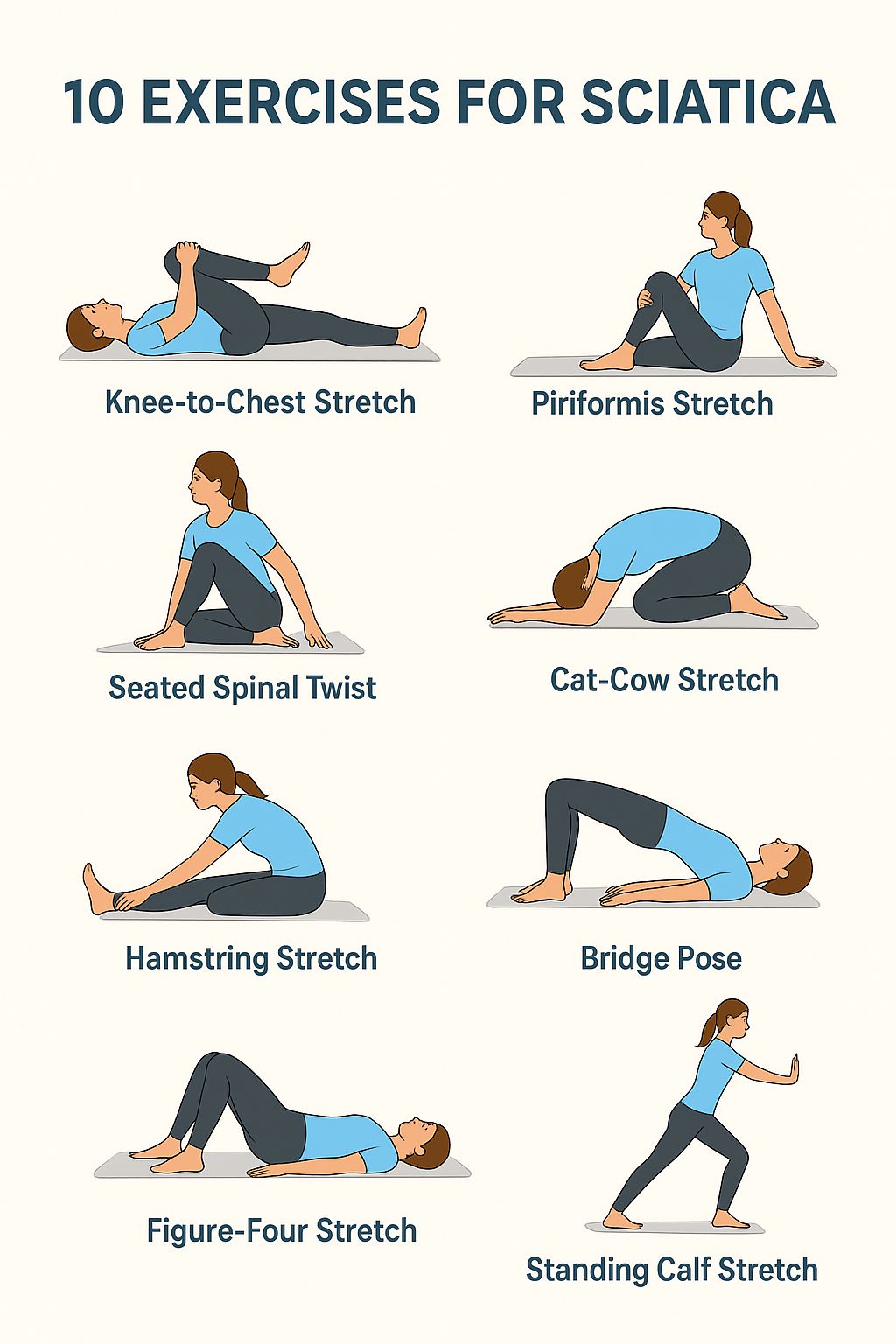
Here’s a list of 10 simple home exercises to help ease sciatica pain and improve flexibility:
How long does sciatica pain last?
For many, the worst of it fades in 4–6 weeks, though some cases linger longer.
Can it come back?
Yes, especially without posture changes or regular movement.
Is rest good or bad?
A little rest helps, but long stretches in bed often slow recovery.
Does exercise help?
Yes, as long as it’s low-impact. Walking, swimming, and gentle yoga are great options.
Will I need surgery?
Unlikely. Surgery is for extreme, persistent cases.
Sciatica is painful, but it’s not a life sentence. Most people recover fully with a bit of patience and the right mix of movement, therapy, and self-care. The key is not to ignore it. Early action—seeing a doctor, adjusting your posture, and staying active—often means faster relief and fewer flare-ups in the future.
Modern web applications rarely live alone. A customer portal, an internal order-management console, or a…
An invoice lands in the accounts inbox for equipment delivered three weeks ago. The supplier…
A Google Ads management campaign can look healthy in the dashboard and still waste money…
A potential customer arrives on your website after searching for a service you provide. They…
In the business world, there’s no such thing as a new idea. The best we…
Both of these work. Both are difficult. And anyone telling you one is obviously better…